The walkway to your front door should feel like a gentle exhale — a path lined with nodding flowers, shaded by small trees, and framed by the kind of greenery that makes neighbors slow down on their evening walks. Great porch landscaping doesn’t just add curb appeal; it creates a mood. Picture pink hydrangeas brushing against white railings, a stone path lit by soft lanterns, and a small bench where you can sip coffee while the bees work the blossoms.
Whether you have a sprawling front yard or a tiny stoop, these porch landscaping ideas will help you weave together texture, color, and warmth. You’ll discover how to layer flowers from tall to trailing, how to use hardscaping to guide the eye, and how to make your porch feel like an extension of the garden itself — a place that welcomes not just you, but every passing butterfly and neighbor. Step outside and start dreaming; your front door is about to become a destination.
1. Front Yard Garden – Flowers and Shrubs in Harmony
Layer together flowering shrubs and perennials for a front yard that feels established and abundant. Smart porch landscaping uses structure — evergreens for winter bones, hydrangeas for summer blousiness, and ornamental grasses for movement. You’ll love how the mix creates interest in every season, like a forest that offers something new with each turn of the calendar.
Start your own porch landscaping by choosing three layers: tall shrubs near the house, mid-height perennials in the middle, and low edging along the walkway. Repeat colors (soft pinks, whites, and blues) to unify the design. The result will feel intentional but natural, as if the garden grew that way all on its own.
2. Full of Colorful Flowers – A Meadow at Your Doorstep
Fill every bed with a riot of color — salvias, coneflowers, coreopsis, and dahlias. A joyful porch landscaping approach doesn’t hold back; it celebrates the full palette of nature. You’ll notice how the blooms soften the hard edges of your house and walkway, like wildflowers tumbling down a hillside, wild and wonderful.
For maximum color in your porch landscaping, choose plants with staggered bloom times. Early tulips and daffodils, then peonies and iris, then black-eyed Susans and sedum, finally asters and mums. Your porch will be framed in flowers from March through November, a continuous gift to every person who walks up your path.
3. Flower Bed in Front of House – Trees and Blooms Together
Anchor the bed with a small flowering tree — dogwood, redbud, or Japanese maple. A thoughtful porch landscaping plan includes vertical interest: the tree rises above the flowers, creating a canopy that feels like a garden room. You’ll love the dappled shade it casts on your porch, a natural umbrella for lazy afternoons.
When adding a tree to your porch landscaping, consider its mature size. A tree too close to the house will crowd your foundation; too far away loses the connection. Aim for 10–15 feet from the porch, and choose a variety that stays under 25 feet tall. Your grandchildren will thank you for the shade.
4. Walkway Leading to the House – A Path of Welcome
Line the walkway with low flowers that guide visitors like a flowering arrow. A gracious porch landscaping design considers the journey from street to door: the path should be wide enough for two to walk side by side, lit softly at night, and bordered with plants that don’t overgrow. You’ll appreciate how the flowers make every arrival feel like an occasion.
Use edging in your porch landscaping to keep mulch and soil off the walkway. Brick, stone, or metal strips create a clean line. Plant lavender, boxwood, or liriope along the edge — something that stays compact and doesn’t need constant trimming. The path becomes a ribbon of welcome, unfurling toward your front door.
5. Trees and Flowers Along the Front Yard – Layered Beauty
Plant trees at the property edges and flowers closer to the house for depth. A balanced porch landscaping composition creates a sense of enclosure — the trees form a green wall, the flowers a colorful foreground, and the porch a cozy room between. You’ll feel held by the landscape, like a clearing in a welcoming wood.
Vary the heights in your porch landscaping for the most pleasing view. Tall trees in back, medium shrubs in the middle, low flowers in front. The layering mimics a natural forest edge, where the eye travels from canopy to understory to groundcover, each level contributing to the whole.
6. Plants Growing Along the Side of the House – Softening the Foundation
Tuck plants along the foundation to soften the transition from house to ground. Essential porch landscaping includes foundation plantings — they hide the concrete base, add visual weight, and make the house feel settled into its site. You’ll love how the greenery makes your home look like it grew there, not just landed.
For foundation porch landscaping, choose plants that won’t outgrow the space. Dwarf evergreens, hydrangeas, and ferns work well. Leave at least 18 inches between the house and mature plants for air circulation and maintenance access. The goal is to frame the house, not hide it — a green skirt, not a green blanket.
7. White House With Lots of Flowers – Classic Cottage Charm
Let a white house be the canvas for a profusion of colorful blooms. A classic porch landscaping pairing — white siding, green shutters, and flower beds in every shade — never fails. The white reflects light, making the flowers seem to glow, like a bride’s bouquet against her dress, fresh and timeless.
If your house is white, your porch landscaping can handle any color palette. Pinks and reds feel romantic. Blues and purples feel cool and calming. Yellows and oranges feel cheerful and bold. The white exterior will tie everything together, a unifying frame for your floral masterpiece.
8. Flowers and Plants on the Front Porch – Containers Count
Group pots and planters on the porch steps and around the door. A complete porch landscaping plan includes container gardens — they add height, color, and flexibility. You can change them with the seasons, moving pots from sun to shade, swapping out annuals for mums in autumn. The porch becomes a stage where the plants are the performers, always changing but always beautiful.
Choose large pots for your porch landscaping (small pots dry out too fast). Use a “thriller, filler, spiller” formula: one tall plant (thriller), several mounding plants (filler), and one trailing plant (spiller) per container. Water them daily in summer heat, and your porch will be a living welcome mat.
9. Stone Walkway to Front Door – Natural Path
Lay a stone walkway that meanders slightly instead of running straight. A romantic porch landscaping choice, a curving path feels like an invitation to wander, not just arrive. The stones can be flagstone, slate, or concrete pavers, spaced with creeping thyme or moss in the gaps. You’ll find yourself taking the long way home just to walk it again.
For a natural look in your porch landscaping, avoid perfectly straight lines. A gentle curve around a tree or flower bed slows the pace and reveals different views as you approach. Edge the walkway with low-growing plants (lantana, sedum, or ajuga) that spill over slightly, softening the hardscape.
10. Outdoor Fire Pit Surrounded by Landscaping – Evening Gatherings
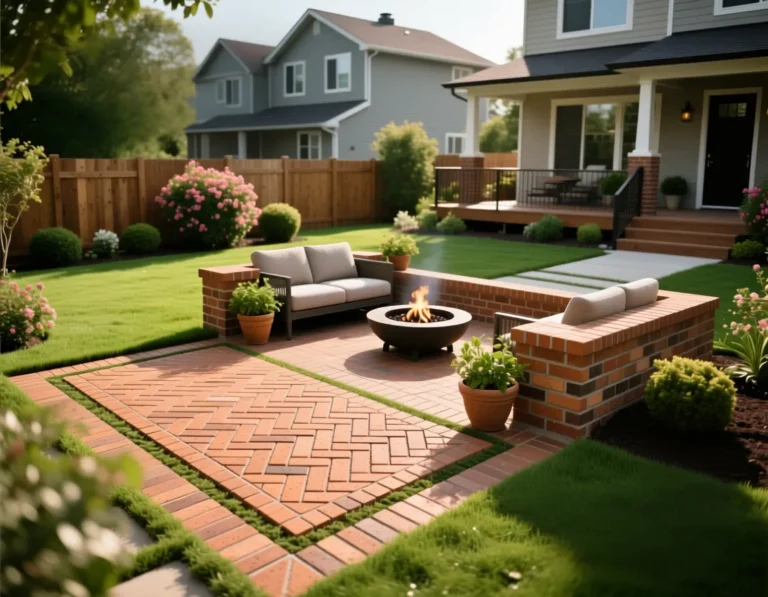
Extend your porch landscaping to include a fire pit area nearby. Even a small gravel circle with a few Adirondack chairs becomes a destination. The landscaping — tall grasses, flowering shrubs, and low perennials — surrounds the pit like a garden room, blocking wind and adding privacy. You’ll roast marshmallows surrounded by flowers, the firelight dancing on petals.
When designing a fire pit as part of your porch landscaping, choose fire-resistant plants (succulents, daylilies, sedum) within a few feet. Keep trees at a safe distance overhead. The combination of fire and flowers is primal and beautiful — a campfire in a meadow, tamed but still thrilling.
11. Garden With Pink and Purple Flowers Next to a Bench – A Place to Pause
Place a bench in your garden where you can sit and admire your work. A thoughtful porch landscaping plan includes seating — not just on the porch but tucked into the flower beds themselves. You’ll use it more than you expect: morning coffee, evening phone calls, watching the hummingbirds fight over salvia. The bench says: this garden is for living in, not just looking at.
Position your bench in partial shade if possible, facing toward the house or a beautiful view. Add a small side table for a drink. Plant around it with fragrant flowers (lavender, dianthus, roses) so the breeze carries sweetness. Your bench will become your favorite spot, a small kingdom of blooms.
12. Flowers and Walkway Leading to the House – Repeated Welcome
Frame the walkway with repeating flower beds on both sides for symmetry. A formal porch landscaping approach creates balance and order — the same plants mirrored left and right, leading the eye straight to the front door. You’ll love the sense of occasion, as if every arrival is a red-carpet moment, lined with blooms instead of photographers.
For a symmetric porch landscaping design, choose plants with consistent shapes — boxwood balls, upright conifers, or standard roses. Repeat the same color palette on both sides. The formality feels intentional and calming, like a garden designed for a stately home, even if your house is a modest cottage.
13. Row of White Flowers Along a Fence – Clean and Classic
Plant a uniform row of white flowers along your front fence for crisp, clean curb appeal. A monochromatic porch landscaping idea — white hydrangeas, white roses, white phlox — feels elegant and unified. The white blooms pop against green grass and any color house, like a string of pearls along the property line, simple but luxurious.
White flowers in porch landscaping also glow at dusk, reflecting the last light of the day. They make your home visible and welcoming even as the sun sets. For maximum impact, use a single variety repeated (all white hydrangeas) or a mix of white-flowering shrubs and perennials with similar bloom times.
14. Pink Flowers in Front of the House – Soft and Romantic
Mass pink flowers — peonies, roses, azaleas — for a soft, romantic front yard. A feminine porch landscaping palette feels gentle and welcoming, like a blush on the landscape. The pinks range from pale blush to deep rose, creating a gradient that draws the eye without shouting. You’ll feel the calm every time you pull into the driveway.
To make pink sing in your porch landscaping, pair it with silver foliage (artemisia, lamb’s ear, or dusty miller) and white flowers. The silver cools down the pink, and the white adds brightness. Add a bench or a birdbath as a focal point, and the romance will be complete — a garden fit for a storybook.
15. Porch Aesthetic – Summer House Dreams
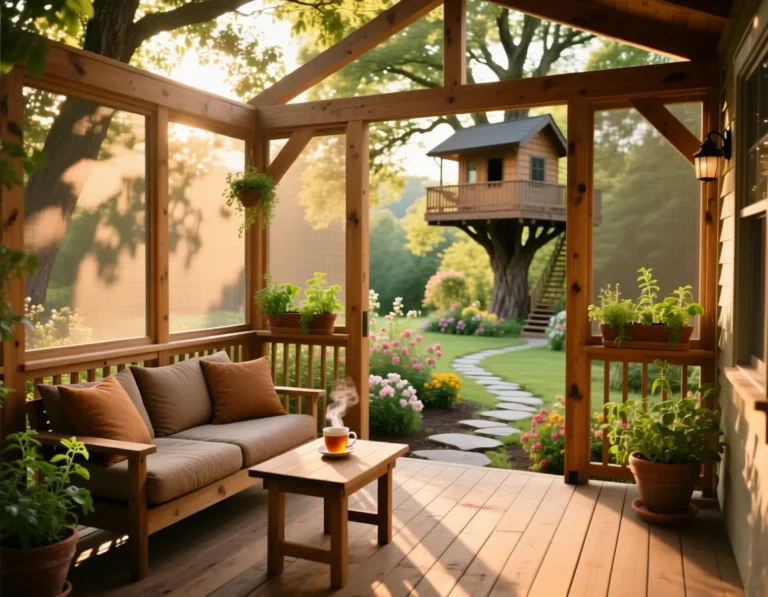
Create a porch aesthetic with rocking chairs, ferns, and climbing vines. A cohesive porch landscaping plan includes the porch itself as part of the garden — the railings wrapped in jasmine, the ceiling painted haint blue, the swing surrounded by potted plants. You’ll never want to go inside; the porch becomes your outdoor living room, shaded and sweet.
Furnish your porch for your porch landscaping with weather-resistant pieces. Add outdoor curtains for shade and privacy, a ceiling fan for breeze, and a small table for iced tea. The goal is to blur the line between house and garden, so you feel like you’re sitting in the flowers even when you’re sheltered under the roof.
16. Two Chairs and a Table – Potted Flowers All Around
Set two chairs and a small table on your porch, surrounded by potted flowers. An intimate porch landscaping setup invites conversation — a place for morning coffee with a partner, afternoon iced tea with a friend, evening wine as the fireflies appear. The pots can be rearranged, replanted, moved to catch the sun or shade, making the porch feel alive and responsive.
Choose pots for your porch landscaping in varied heights and materials — terracotta, ceramic, galvanized metal. Group them in odd numbers (three, five) for a natural look. The chairs should be comfortable enough for an hour of sitting, because once you sit among the flowers, you may not want to get up.
17. House With Flowers on Front Porch – Picture-Perfect Welcome
Frame your front door with matching planters on both sides for instant symmetry. A foolproof porch landscaping trick — two identical pots, overflowing with flowers, flanking the entrance. The eye goes straight to the door, and the flowers say “welcome” before you’ve even knocked. You can swap the plants seasonally, but the pots stay constant, reliable and beautiful.
Choose planters that are at least 16 inches wide for your porch landscaping — small pots look skimpy and dry out fast. Fill them with a thriller (a tall grass or spike), a filler (geraniums or petunias), and a spiller (ivy or calibrachoa). Water them every morning, and they’ll reward you with blooms until frost.
18. Garden in the Middle With a Fence Behind – Layered Depth
Design a garden bed that sits in the middle of the lawn, with a fence as a backdrop. A formal porch landscaping element, an island bed creates a focal point from the street and from your porch. The fence adds height and structure, making the flowers stand out, like a painting leaning against a wall, needing no further frame.
Island beds in porch landscaping should be accessible from all sides — keep them narrow enough to reach the center (no more than 6 feet wide). Plant the tallest flowers in the middle, graduating down to the edges. The effect is a bouquet rising from the grass, a celebration of color and texture in the middle of your view.
19. Lots of Flowers and Plants in Front Yard – Abundant and Joyful
Plant abundantly — don’t hold back on color or texture. A maximalist porch landscaping style celebrates fullness: flowers spilling over paths, vines climbing trellises, shrubs blooming in waves. You’ll feel like you live in a secret garden, every window framing a different composition, every season revealing new surprises.
To achieve abundance in your porch landscaping, plant in drifts of odd numbers (three, five, seven of each variety). Use repetition to unify — the same pink rose repeated in three spots, the same boxwood used throughout. Abundance without repetition feels chaotic; abundance with repetition feels luxurious and designed.
20. Garden Full of Colorful Flowers – The Rainbow Bed
Celebrate every color in your front yard garden — reds, oranges, yellows, blues, purples. A joyful porch landscaping palette doesn’t apologize for brightness; it leans in. The rainbow of flowers feels like a festival, a parade of petals marching toward your door. You’ll smile every time you pull into the driveway, greeted by a riot of nature’s happiest hues.
To keep a rainbow porch landscaping from feeling chaotic, anchor it with green — lots of green foliage as a neutral backdrop. Use white flowers as buffers between hot colors (red and orange can clash; a white geranium between them soothes). The result is energetic but not exhausting, like a meadow in full summer bloom.
21. Flower Garden in Front of the House – Classic Placement
Place your flower garden directly in front of the house, running the length of the porch. A classic porch landscaping layout ties the building to the ground, making the house feel rooted and welcoming. You’ll appreciate how the blooms soften the foundation and draw the eye across the facade, like a necklace laid against the house’s neck.
For a front-of-house porch landscaping bed, keep the depth proportional — a one-story house looks best with a bed 6-8 feet deep; a two-story house can handle 10-12 feet. Vary the plant heights: tallest near the house, shortest near the lawn. The bed will frame your porch like a living picture frame, always changing, always beautiful.
22. Pink and White Flowers Line a Side Wall – Delicate Edge
Line a side wall or fence with alternating pink and white flowers for a soft, romantic border. A delicate porch landscaping touch, this edge planting leads the eye along the property line without overwhelming. The pink and white together feel like a ribbon tied around your garden’s finger — sweet, intentional, and perfectly proportioned.
Use this porch landscaping idea along a walkway, a driveway, or a side fence. Choose plants that stay compact (liriope, dwarf astilbe, or impatiens) so they don’t flop over the edge. The repetition of pink and white creates a rhythm that soothes the eye, a gentle beat in the larger symphony of your yard.
23. Colorful Flowers Line the Walkway – Every Step a Delight
Edge your walkway with a ribbon of colorful flowers that changes with the seasons. A welcoming porch landscaping feature, the walkway border guides visitors while delighting them with color. You’ll notice how people slow down when they walk your path, bending to admire a bloom, smiling at the butterflies it attracts. The journey to your door becomes part of the visit.
For a walkway border in porch landscaping, choose low-growing, tough plants that can handle occasional foot traffic. Creeping phlox, sedum, lavender, or dwarf marigolds all work well. Plant them in a continuous line or in staggered clumps. The border should be a whisper of color, not a shout — a guide, not a wall.
24. Front Yard Is Clean and Ready – A Fresh Canvas
Start with a clean, weed-free front yard as your blank canvas. The best porch landscaping begins with good bones: healthy soil, fresh mulch, edged beds, and a manicured lawn. You’ll appreciate how the clean base makes every plant pop, like a freshly stretched canvas waiting for paint. The work of preparation is invisible but essential, the foundation of all beauty to come.
Spend a weekend on the basics of your porch landscaping: pull every weed, edge all beds, refresh the mulch, and trim any overgrown shrubs. Then stand back and admire. Even without a single new plant, your yard will look 100% better. A clean canvas is an invitation to create — now you’re ready to add the flowers.
25. Front Yard Lit Up With Lights – Evening Magic
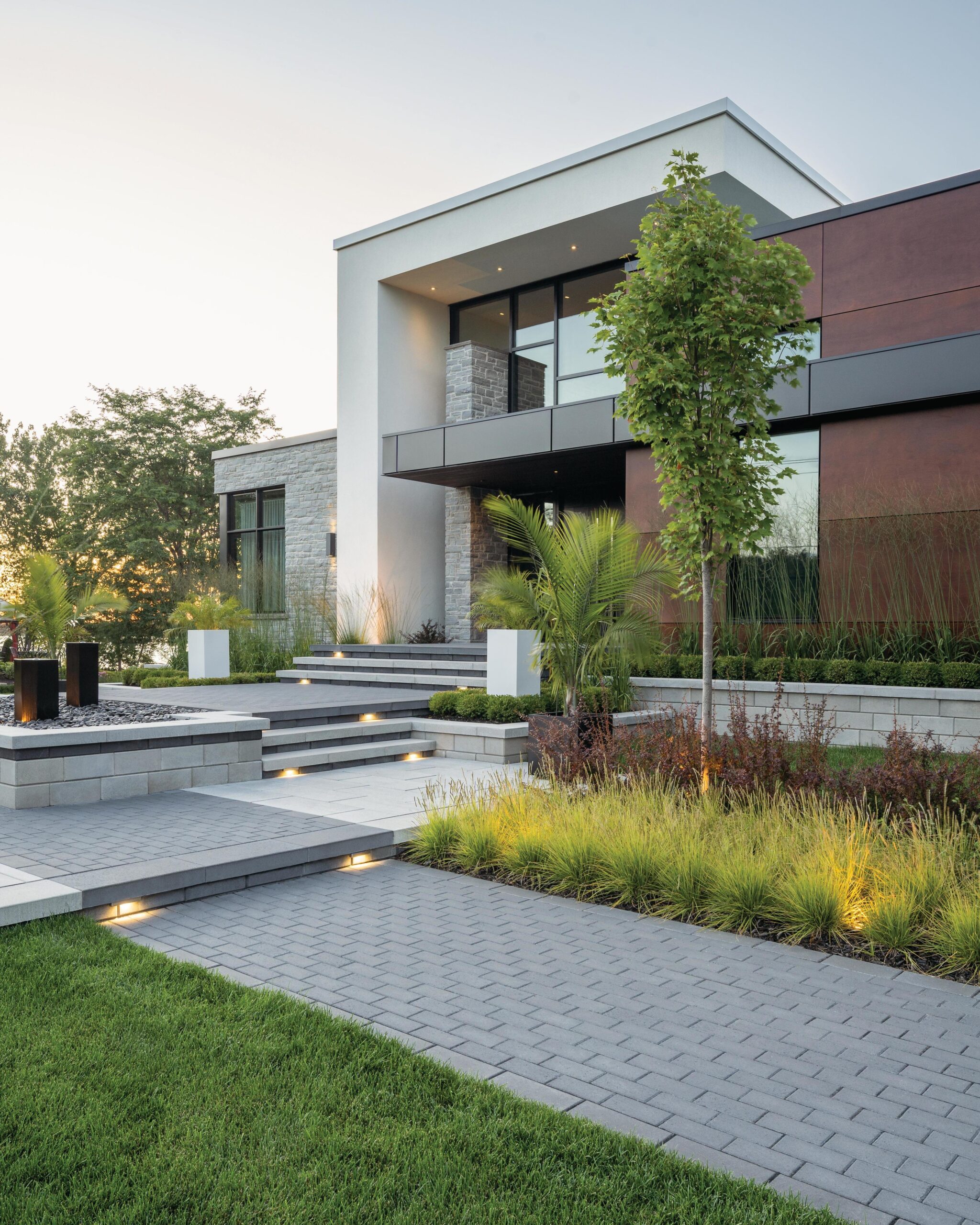
Add landscape lighting to enjoy your porch landscaping after dark. A magical porch landscaping touch — uplights on trees, path lights along the walkway, string lights across the porch — transforms your yard into a nighttime garden. You’ll sit outside longer, hosting evening conversations under the soft glow, the flowers still visible but softened, like a memory of their daytime selves.
For effective lighting in your porch landscaping, use warm white bulbs (2700K) to mimic firelight. Aim lights down (not up into neighbors’ windows) and avoid over-lighting — a few well-placed fixtures are more dramatic than a dozen scattered. The goal is to reveal the garden’s bones at night, not to turn it into a stadium.
🪻 The Welcoming Wreath: 6 Timeless Tips for Porch Landscaping That Greets Like an Old Friend
- 🌱 Start With a Walkway That Invites Wandering: Your porch landscaping should make the journey from street to door a pleasure. A path at least 4 feet wide, gently curving, lined with low flowers or soft edging. Every step should feel like an arrival, not just progress. Think of it as a red carpet made of petals.
- 🌿 Layer Plants Like a Forest Edge: Tall evergreens near the house, flowering shrubs in the middle, perennials and annuals in front. This classic porch landscaping structure creates depth and interest year-round. The eye travels from the porch roof down to the ground, finding beauty at every level, like a woodland that offers secrets in every stratum.
- 🪴 Use Containers to Frame the Entry: Two matching pots on either side of the front door, plus a few smaller pots on the steps. Container porch landscaping adds height and color exactly where guests look first. Change the plants with the seasons — bright annuals in summer, mums in fall, evergreens with berries in winter. Your porch always feels fresh and tended.
- 🪑 Add a Seat Somewhere in View: A bench, a porch swing, or two rockers. Visible seating in your porch landscaping sends a subconscious message: this is a place to stay awhile. Neighbors will stop to chat. You’ll sit there yourself, watching the garden grow. The bench makes the house feel lived in, even from the street.
- 💡 Light the Path and the Porch: Low-voltage path lights, a fixture by the door, and maybe string lights overhead. Illuminated porch landscaping extends your usable hours and makes your home feel safe and welcoming at night. Guests will appreciate not tripping in the dark, and you’ll appreciate the way the garden looks like a storybook after sunset.
- 🌸 Repeat Colors and Shapes for Unity: Don’t plant one of everything. Successful porch landscaping uses repetition — the same pink rose in three places, the same boxwood balls flanking the steps, the same white flowers repeated along the walkway. The repetition creates a rhythm that soothes the eye, turning a collection of plants into a designed garden.
Frequently Asked Questions
Q: What are the easiest plants for porch landscaping beginners?
Ans: Start with foolproof favorites: hydrangeas (sun or shade varieties), daylilies (nearly unkillable), black-eyed Susans (drought-tolerant), and hostas (for shady spots). For containers in your porch landscaping, try geraniums, petunias, or calibrachoa. These plants forgive missed waterings and still bloom their heads off. You’ll gain confidence as they thrive, and soon you’ll be ready for more adventurous choices.
Q: How do I design porch landscaping for a small front yard?
Ans: Think vertical and use every inch. In a small porch landscaping space, choose one small tree (Japanese maple or dogwood) to add height without bulk. Use climbing vines on trellises (clematis, jasmine) to draw the eye up. Keep beds narrow (3-4 feet deep) but pack them with layers of plants. Containers on the porch itself add color without using yard space. A small yard can still feel lush — it’s all about proportion and intention.
Q: When is the best time to plant for porch landscaping?
Ans: Spring and fall are ideal for perennials, shrubs, and trees in your porch landscaping. The cooler temperatures and regular rain help roots establish. Plant annuals (petunias, marigolds, impatiens) after the last frost in spring. In warm climates, you can plant year-round, but avoid summer heat waves. Your local extension office can give you specific dates for your area — timing matters almost as much as the plants themselves.
Q: How do I maintain porch landscaping without spending every weekend weeding?
Ans: Mulch is your best friend. Apply 2-3 inches of shredded hardwood or pine bark in your porch landscaping beds every spring. Mulch suppresses weeds, retains moisture, and looks tidy. Group plants with similar water needs together (hydrozoning) so you don’t over- or under-water. Choose slow-growing shrubs that need less pruning. A little planning upfront saves hours of work later — leaving you time to actually enjoy your garden.
Q: Can I do porch landscaping on a tight budget?
Ans: Absolutely. Start with soil and mulch — healthy soil makes everything grow better. Buy small plants (they catch up quickly and cost much less). Divide perennials from friends’ gardens (most gardeners are happy to share). Use annual seeds instead of starts for containers. In your porch landscaping, focus on one area at a time rather than trying to do everything at once. A garden built slowly, with patience and resourcefulness, often ends up more personal and beautiful than one bought all at once.
Conclusion
You’ve wandered through twenty-five visions of porch landscaping — from stone walkways lined with pink phlox to white houses buried in hydrangeas, from fire pits surrounded by ornamental grasses to tiny porches made grand with containers and climbing vines. Each image held a different promise, but all shared the same heartbeat: the path to your front door should be a journey of beauty, a prelude to the welcome inside. The flowers don’t just decorate; they communicate. They say: someone lives here who notices the small things, who tends the earth, who believes that every visitor deserves a beautiful arrival.
So dig into that bed you’ve been neglecting. Plant a row of lavender along the walkway. Hang a fern on the porch hook that’s been empty too long. Your porch landscaping doesn’t need to be perfect next week — it needs to be started today. The soil is warm, the nurseries are full, and your front door is waiting to be framed in petals. Grab a trowel, put on some gloves, and begin. The neighbors will notice. The bees will thank you. And every time you come home, you’ll feel it: the quiet pride of a house that knows how to say hello.